UX/UI DESIGN
DESIGN SYSTEM
INTERACTION DESIGN
2025 - 2026
POS Terminal
Designing an integrated POS & CRM system for high-volume merchants
ROLE
Interaction Design
Design System
UX Design
UI Design
TEAM
1 Product Designer
1 Domain Expert/Analyst
Engineering Team
IMPACT
Designed a fast, state-driven POS experience
optimized for real-world retail usage
Improved clarity of transaction,
payment, and error states
Established a POS logic that maps
consistently into the back-office system
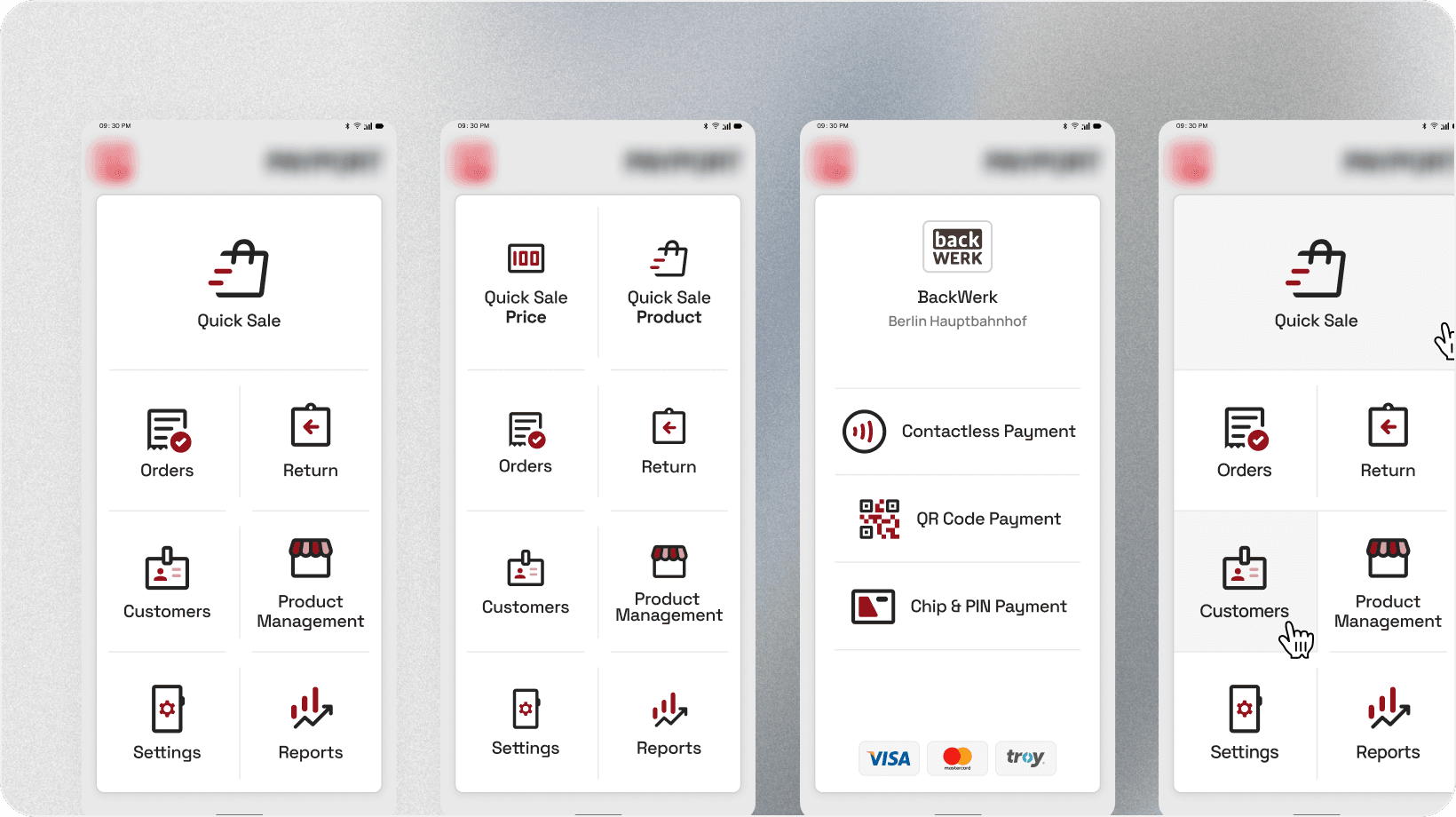
The POS terminal is the execution layer of a multi-surface payment platform used by merchants to complete sales, manage refunds, and handle multiple payment types. The interface needed to support rapid interactions while remaining reliable and easy to recover from errors.
I led the interaction and UI design of the POS terminal experience, focusing on speed, reliability, and error handling in high-pressure retail environments.
I worked closely with a domain expert to understand merchant workflows, payment constraints, and edge cases.
CHALLENGE
Designing a POS interface that balances speed and simplicity with complex transactional scenarios such as cancellations, refunds, offline states, and multiple payment methods, all within a limited screen and time-critical context.
PROBLEM
Many POS systems fail to communicate system states clearly, especially during errors or edge cases. This leads to transaction delays, merchant frustration, and confusion when POS actions are later reviewed in back-office tools.
GOALS
Minimize interaction steps for high-frequency actions
Provide immediate, unambiguous feedback for every transaction state
Enable fast recovery from failed or cancelled transactions
Ensure POS actions are clearly reflected in the back-office system
STEP 1: UNDERSTANDING THE SYSTEM
To design the POS terminal experience, I first focused on understanding how merchant actions are processed within the broader payment system. Using product documentation and close collaboration with a domain expert, I identified key transaction states, system constraints, and dependencies on external services that could affect response time and reliability.
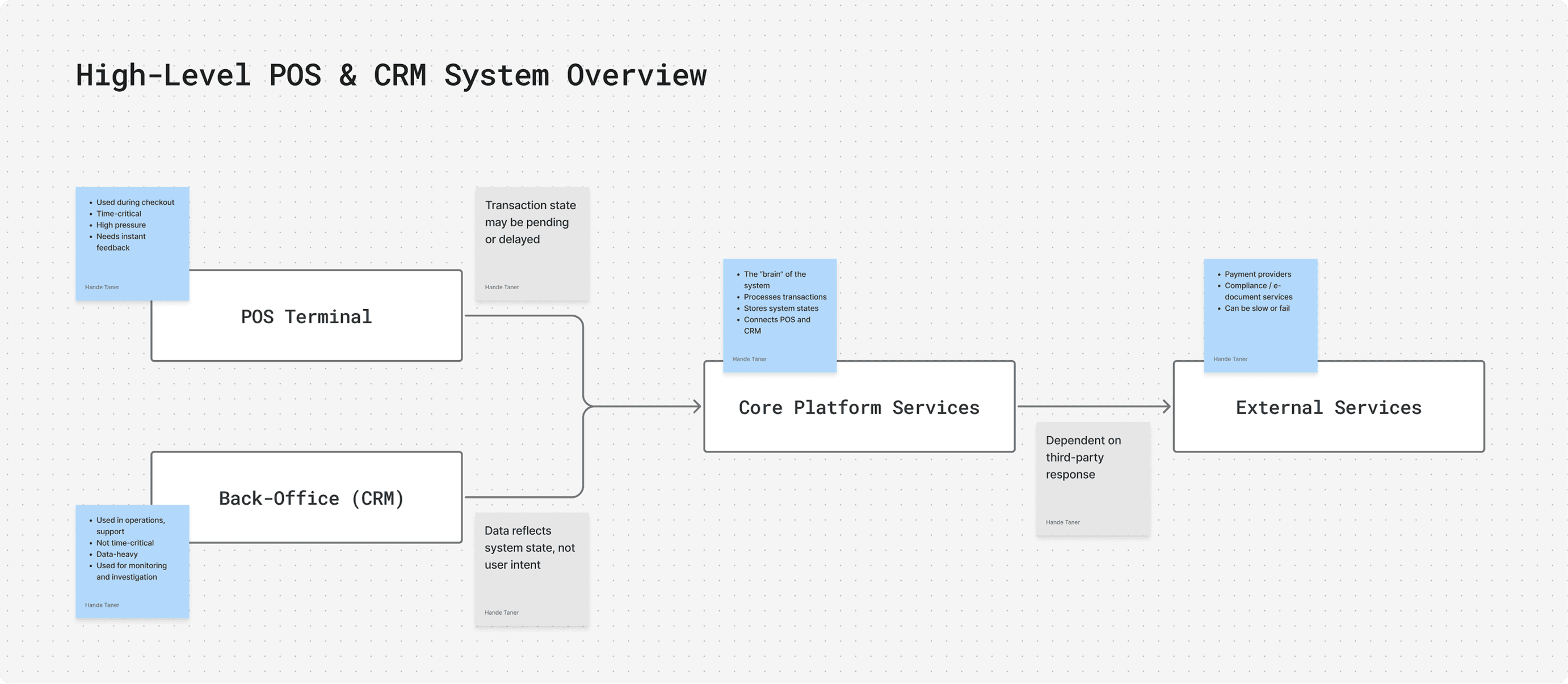
Because POS actions depend on core services and external providers, transaction states cannot always be immediately final. This directly informed the design of clear processing, success, and error states, as well as fast recovery flows for failed or cancelled transactions.
STEP 2: PROBLEM FRAMING
Based on system understanding and expert input, I focused on key POS challenges:
Supporting fast, error-resistant transactions
Clearly communicating processing, success, and failure states
Enabling quick recovery from cancelled or failed payments
This ensured the interface was designed for real-world, high-pressure retail environments.
STEP 3: FLOW AND INTERACTION DESIGN
I designed state-driven transaction flows that separate user intent from system confirmation. High-frequency actions were optimized for speed, while secondary actions were minimized to reduce cognitive load during checkout.
STEP 4: INTERFACE DESIGN & ITERATION
The POS interface was designed for touch-based interaction with large targets, clear hierarchy, and strong visual feedback. Designs were iterated through scenario-based reviews with a domain expert, focusing on edge cases such as delayed responses and payment failures.
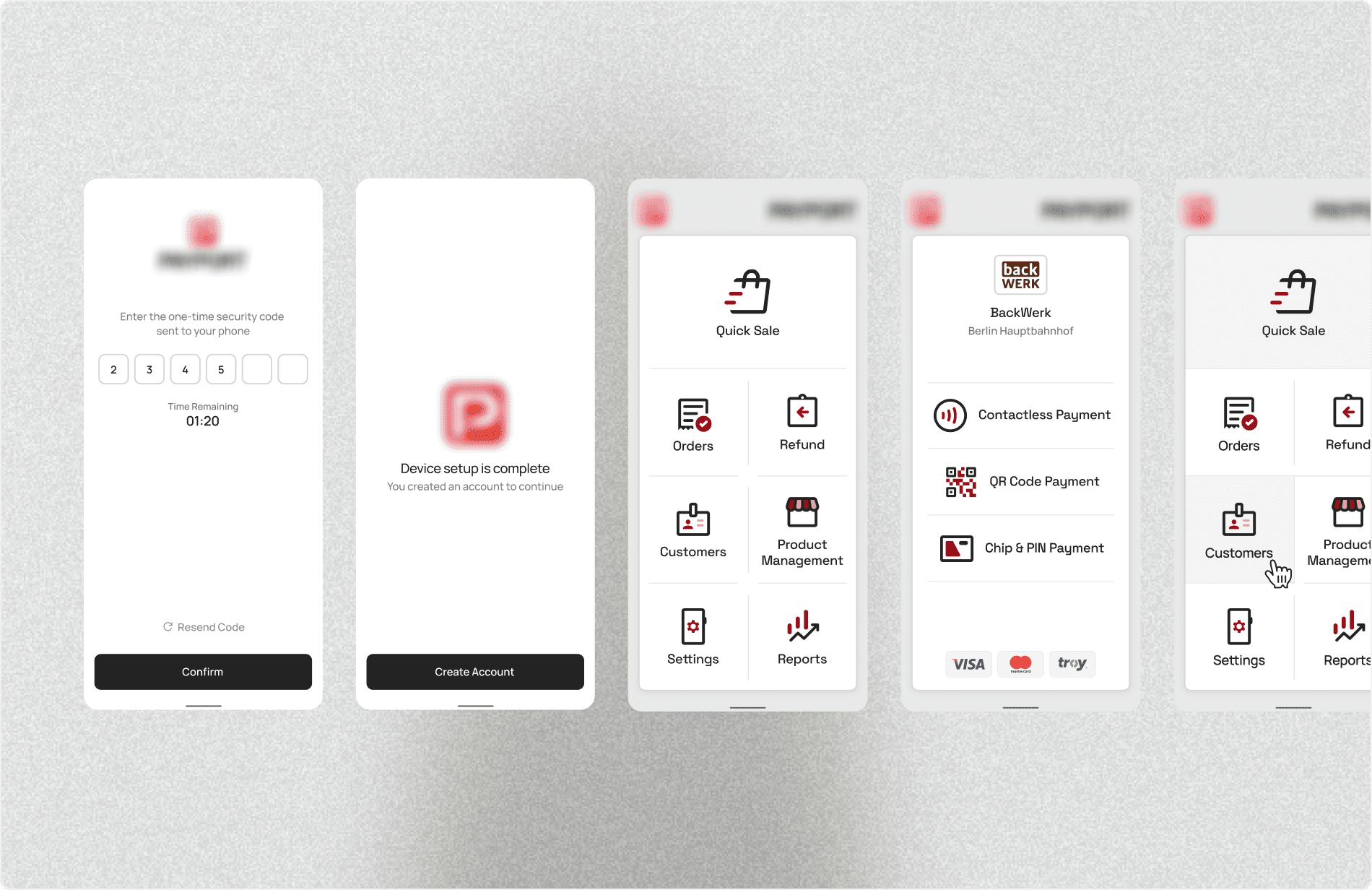
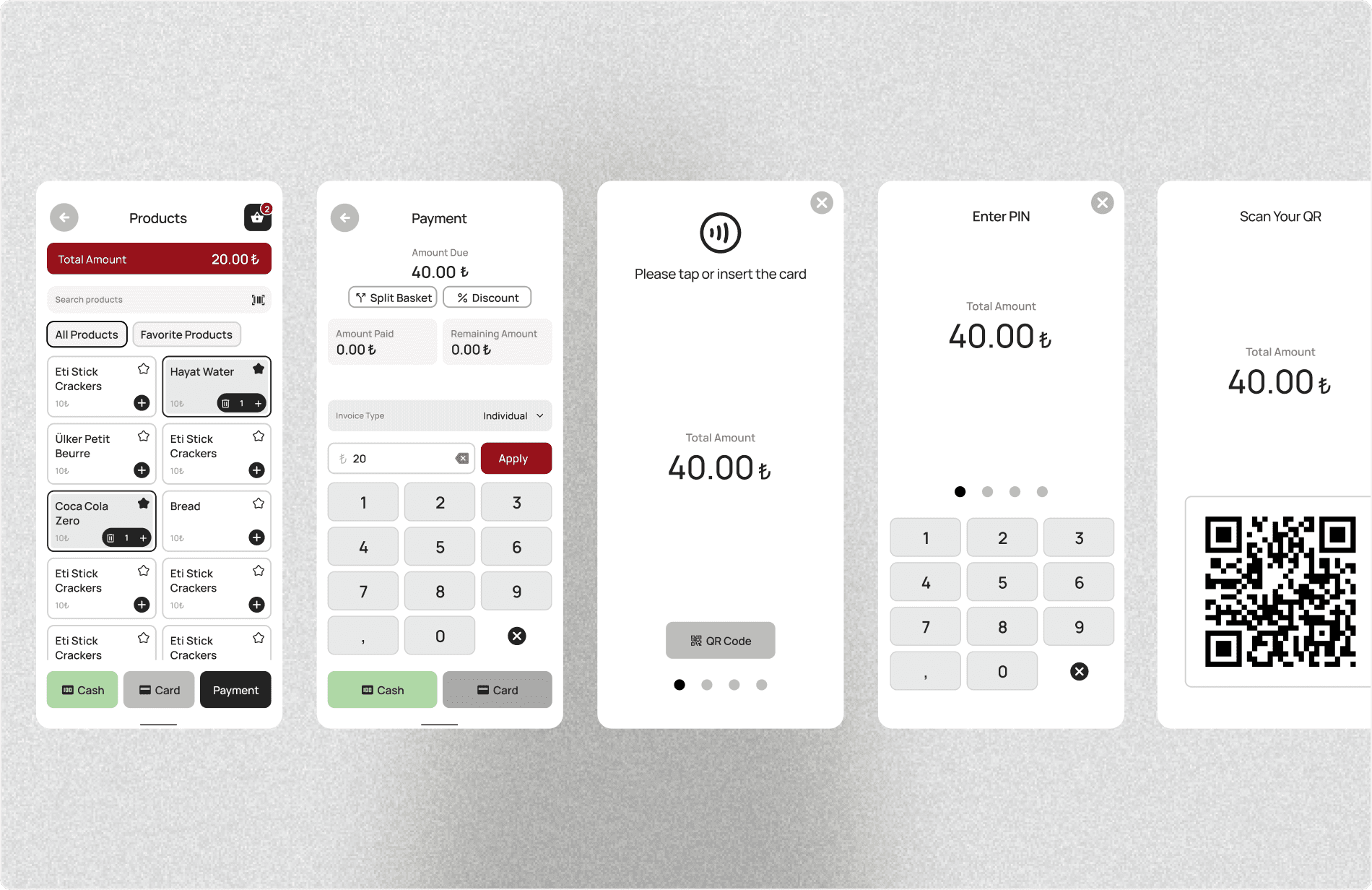
Delivered a POS experience optimized for speed and clarity
Designed resilient transaction flows that handle failure gracefully
Created a consistent interaction logic aligned with the back-office system